One of 18 possible playthroughs of The Freeform Fable
Gameplay:
The Freeform Fable is an interactive digital narrative game that draws from the many contradictory folk tales about the “glaistig”, or “White Maiden”, a spirit of Scottish folklore. Depending on the account, she is a helpful spirit who tends to livestock in return for a dish of milk, a poltergeist who bangs about the house at night, or a trickster whose pranks on passers-by can have dire consequences. Inspired by the environmental storytelling of The Vanishing of Ethan Carter and Dear Esther, the game places the player on a remote island, where they uncover the story of its former inhabitants by exploring the landscape and interacting with glowing “narrative nodes”. The order in which the player finds the nodes shapes the story, including whether the glaistig turns out to be its monster, its victim, or merely a bystander.
The Freeform Fable is an interactive digital narrative game that draws from the many contradictory folk tales about the “glaistig”, or “White Maiden”, a spirit of Scottish folklore. Depending on the account, she is a helpful spirit who tends to livestock in return for a dish of milk, a poltergeist who bangs about the house at night, or a trickster whose pranks on passers-by can have dire consequences. Inspired by the environmental storytelling of The Vanishing of Ethan Carter and Dear Esther, the game places the player on a remote island, where they uncover the story of its former inhabitants by exploring the landscape and interacting with glowing “narrative nodes”. The order in which the player finds the nodes shapes the story, including whether the glaistig turns out to be its monster, its victim, or merely a bystander.
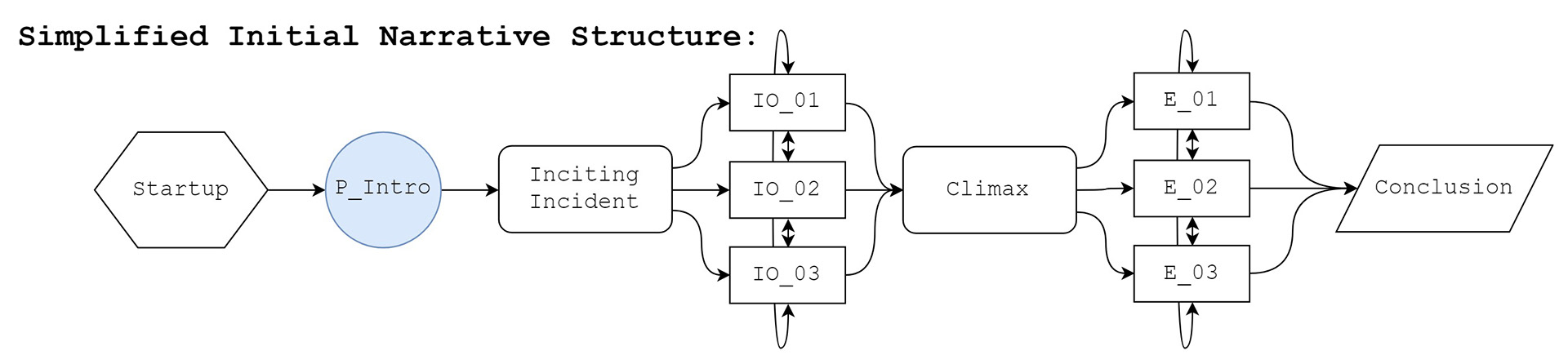
Figure 1 - Visualisation of The Freeform Fable's narrative structure.
Narrative design:
When interacted with, each narrative node checks which nodes the player has already found and tells the part of the story that fits. Each node has a beginning, a middle, and an end version of its narrative, written to flow into and out of its neighbours, so the story stays coherent in any order. Three rising-action nodes can be found in six orders, and the story can end in three ways, providing 18 possible narrative paths (see Figure 1). In an earlier plan, the intention was to allow the player to choose a perspective at the start, which would have tripled the story to 54 potential combinations. After feedback on my pitch, however, I trimmed the narrative plan down to a single perspective path to keep the scope manageable.
When interacted with, each narrative node checks which nodes the player has already found and tells the part of the story that fits. Each node has a beginning, a middle, and an end version of its narrative, written to flow into and out of its neighbours, so the story stays coherent in any order. Three rising-action nodes can be found in six orders, and the story can end in three ways, providing 18 possible narrative paths (see Figure 1). In an earlier plan, the intention was to allow the player to choose a perspective at the start, which would have tripled the story to 54 potential combinations. After feedback on my pitch, however, I trimmed the narrative plan down to a single perspective path to keep the scope manageable.
Credits:
Built with Fungus for dialogue and Gaia for terrain, generated from a heightmap of the island Inchcailloch in Loch Lomond. Additional third-party assets used can be viewed in this credits document.
Built with Fungus for dialogue and Gaia for terrain, generated from a heightmap of the island Inchcailloch in Loch Lomond. Additional third-party assets used can be viewed in this credits document.
Developed for the Interactive Digital Narrative elective module at the Glasgow School of Art’s School of Simulation and Visualisation.