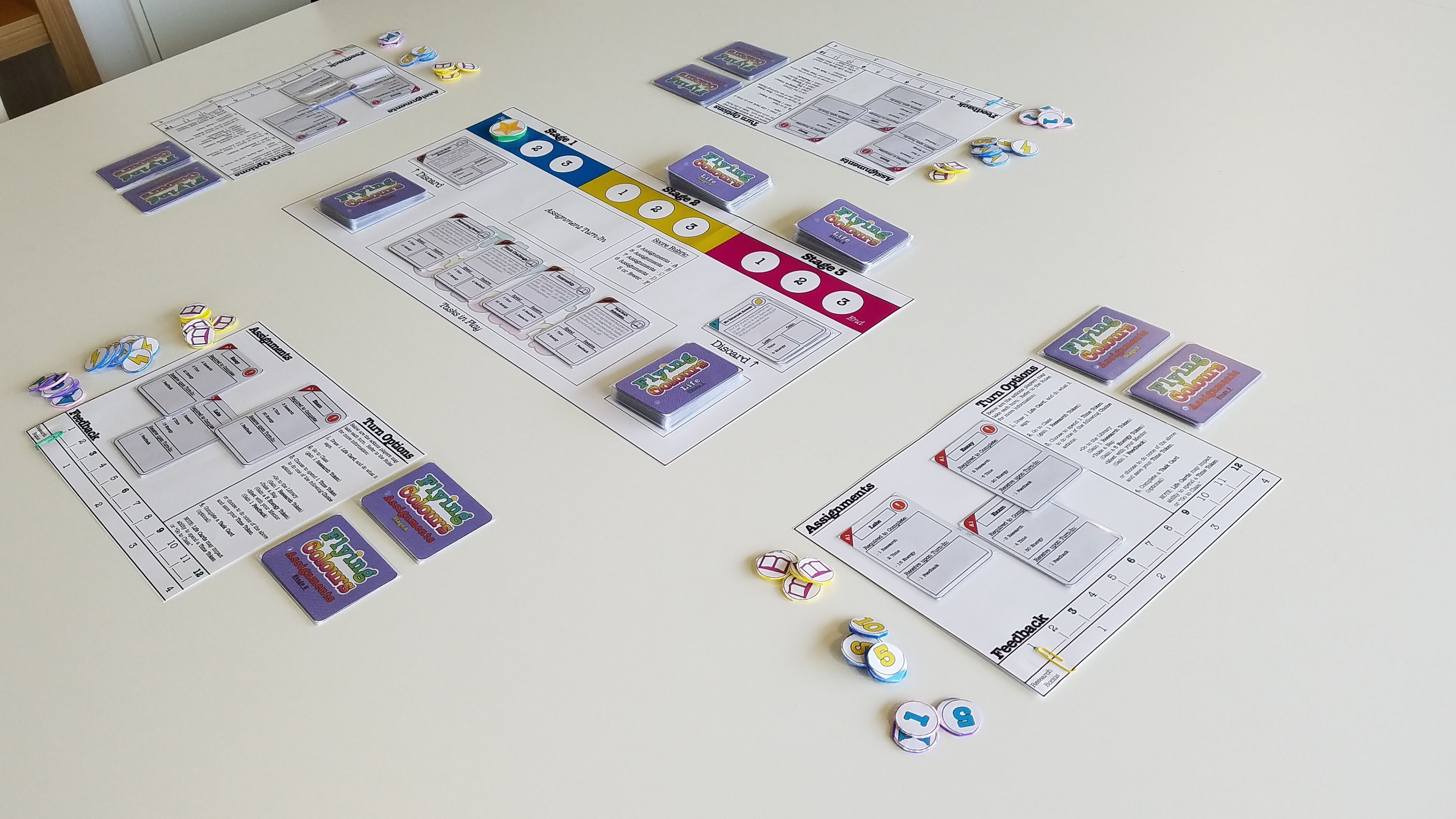
4-player setup
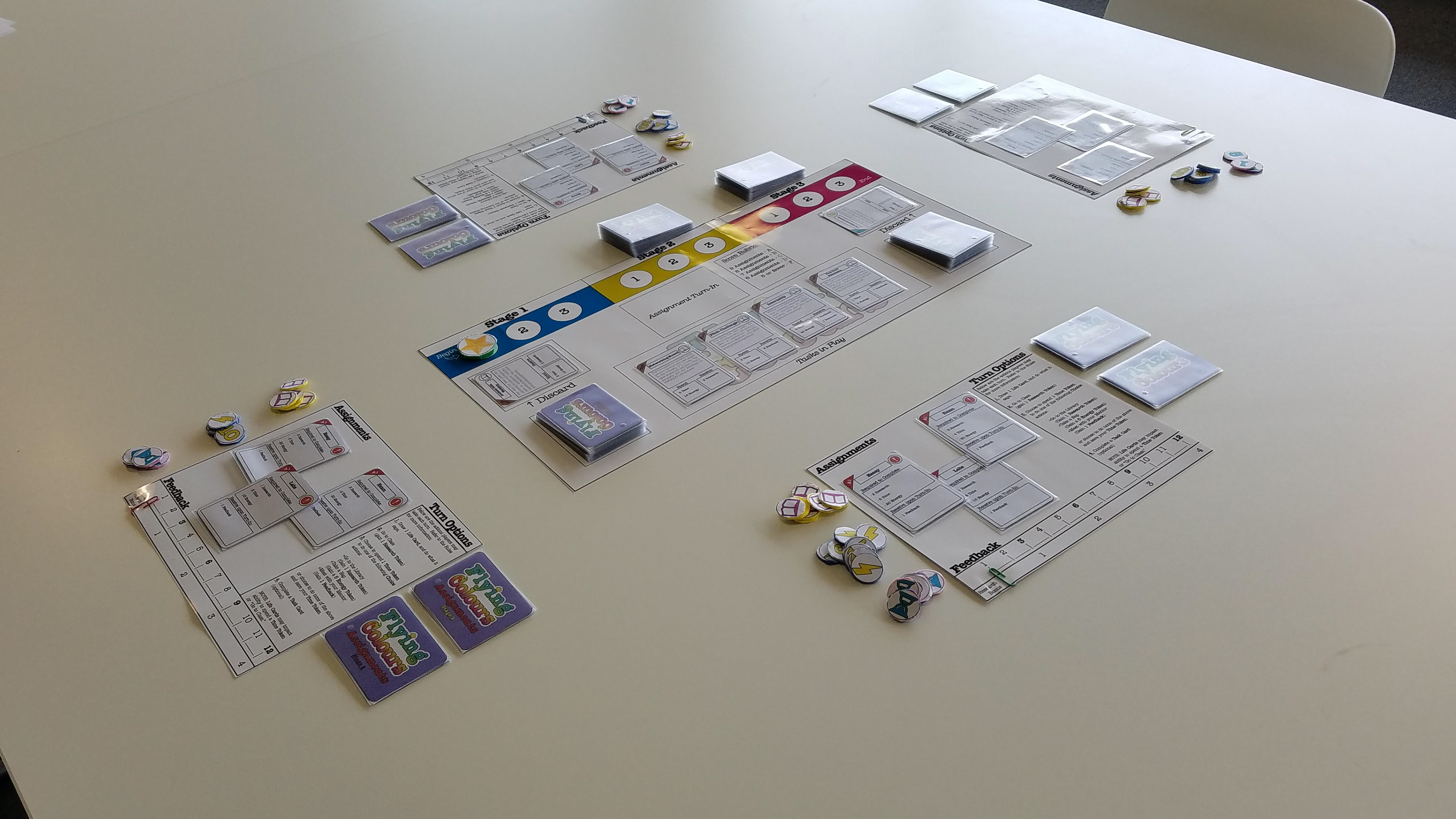
4-player setup
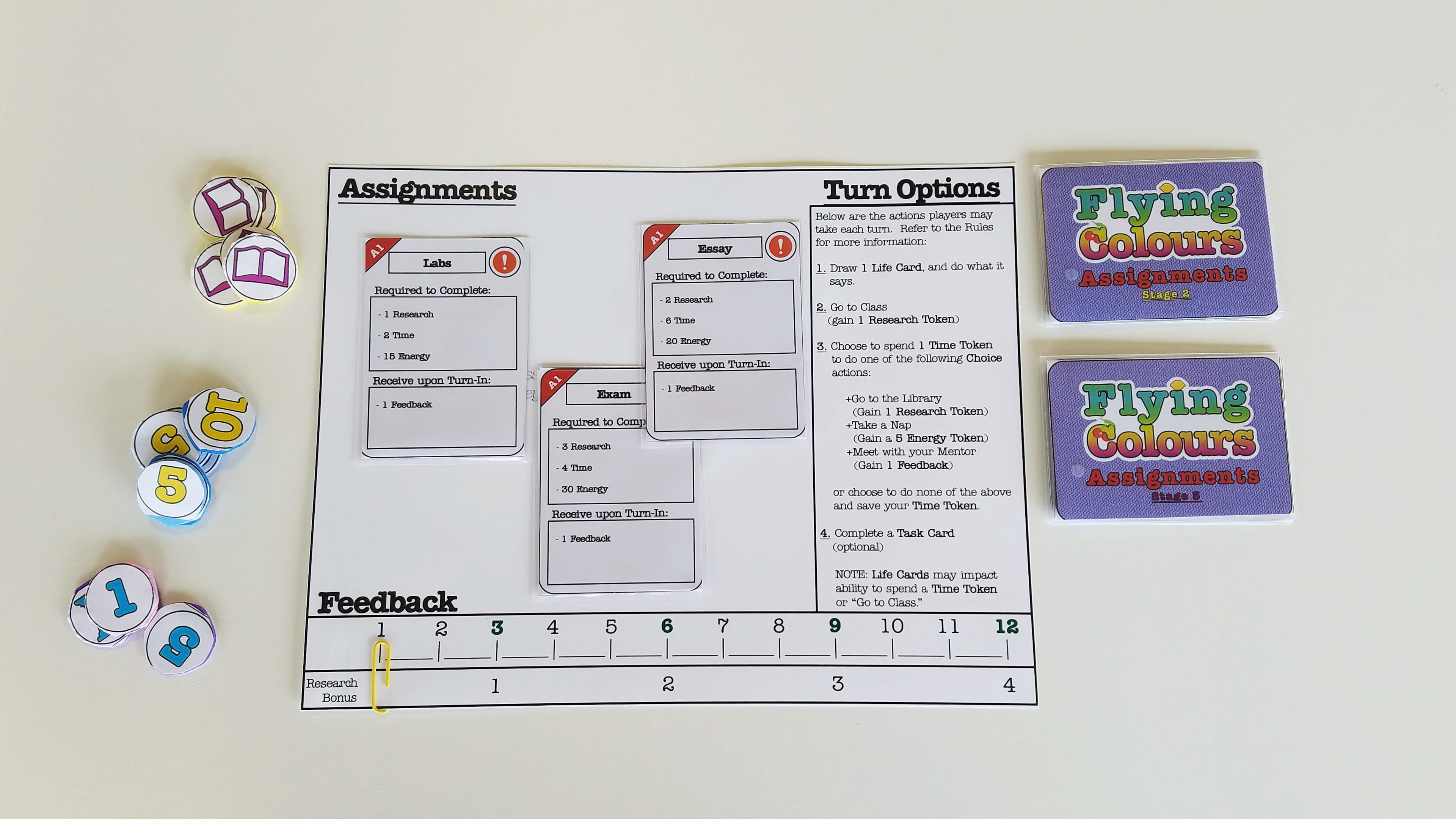
Player mat with Assignments and Resource tokens

Game board
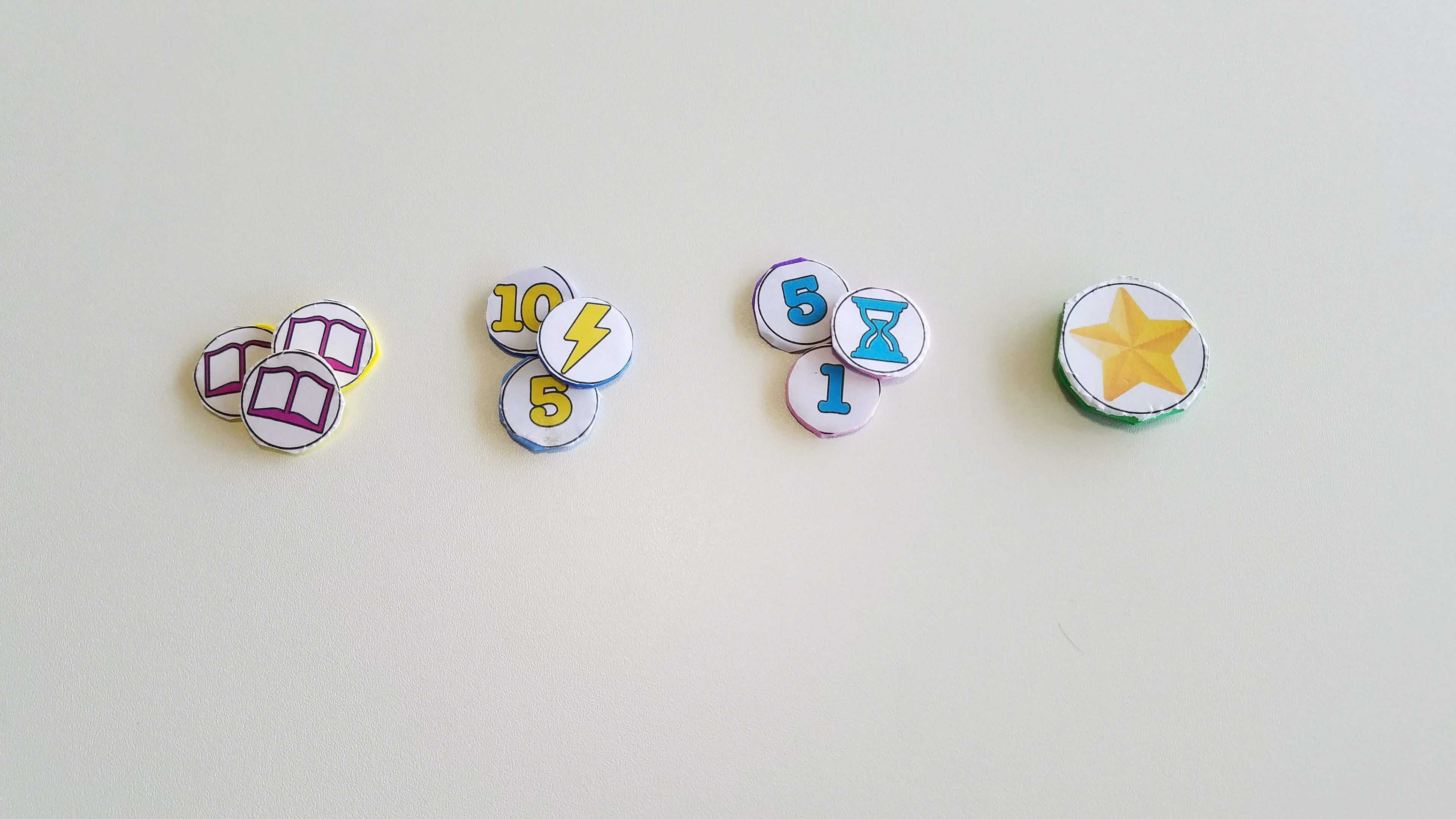
Resource tokens
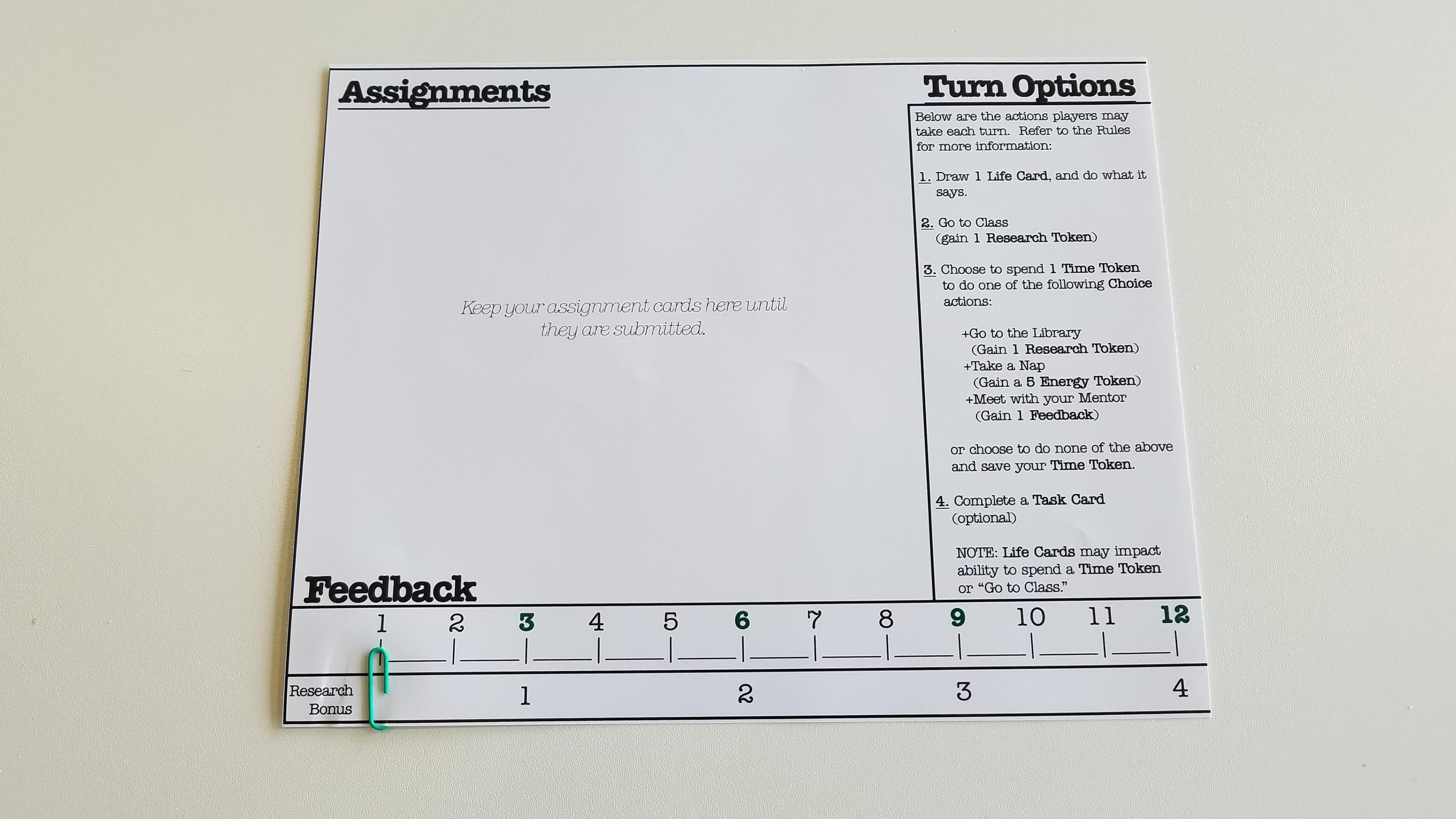
Empty player mat
Gameplay:
Players are flatmates getting through their first year at university, across three stages that mirror the real transition: a welcoming start, the “shock” of the first deadlines, and growing confidence. Each turn they draw a Life card, which might be good news, bad news, or a mixed bag, from a sunny day in Glasgow to an essay lost to a fried hard drive. Some are group events, such as cleaning the flat or a group study session, where all players decide whether to give up their own time to join in. Players then attend class and choose how to spend their time: studying in the library, napping to recover energy, or meeting a mentor for feedback. Time can’t be won back, but energy can, and feedback grows into the most useful resource of all. Players spend these resources on nine assignments over the year, from essays to exams, plus optional tasks shared between all players, such as taking an internship or running for society president.
Design:
The game is built on research into student self-efficacy: a student’s belief that they can succeed at a task. Assignments are pass/fail against clear criteria, to show how marking criteria can break a big task into manageable steps. Players only need to complete enough to pass the year, not to top the class. It was designed for study-skills workshops, with a group discussion after play to reflect on everyone’s strategies. We playtested the final version with our MSc classmates and SimVis staff.
My role:
I contributed heavily to the game’s design and to writing the design document, and I led its final edit. I designed all of the game’s visuals: the board, the player mats, the card icons and templates, and the tokens. I also proofread and edited the rulebook, and helped assemble the final game by sleeving the cards, adding paperclip sliders to the player mats and gluing the token art onto foam.
Team:
Níall Tracey (co-designer and game balancing), Francisco Varela (research, card imagery, and printing the board and player mats) and Madeleine Johnston (research, card imagery, and the rulebook), all MSc Serious Games and Virtual Reality.
Developed for the Serious Game Research and Design module at the Glasgow School of Art’s School of Simulation and Visualisation.